

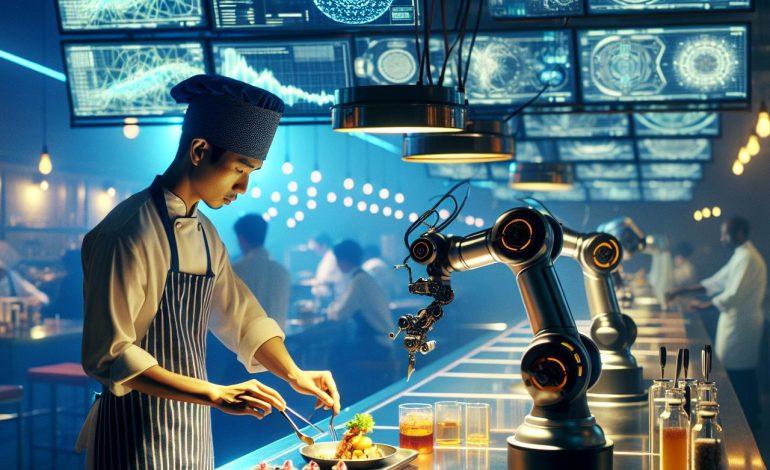
AI and Automation in Restaurant and Cloud Kitchen Operations
In boardrooms and back kitchens across the world, a quiet revolution is underway. AI and automation are shifting from buzzwords to the invisible backbone of profitable restaurants and cloud kitchens. The operators who treat algorithms and robots as teammates – not threats – are pulling ahead in the next wave of food business growth.
Why AI Is Moving From Experiment to Everyday Operations
A few years ago, AI in the food and beverage industry sounded like sci-fi: robots flipping burgers and drones delivering pizzas. Today, the story is more grounded – and far more powerful. Global spending on AI in retail and consumer products, which includes foodservice, is projected to reach tens of billions of dollars this decade, as brands use data to improve demand forecasting, pricing, and personalization, according to analyses summarized by McKinsey. At the same time, labor costs, inflation, and delivery commissions are squeezing margins, forcing operators to “do more with less” and treat food technology as a strategic lever rather than a gadget.
Research compiled by the Nation’s Restaurant News tech outlook indicates that a majority of large chains are now increasing technology budgets, with AI-powered scheduling, inventory tools, and digital ordering topping the list. For ambitious cloud kitchen business founders and QSR operators, the question has flipped from “Should we invest in AI?” to “Where will AI create the fastest, safest return?”
From Gut Feel to Data-Driven Precision: The New Back-of-House
One cloud kitchen operator in Bengaluru used to rely on gut feel to prep for weekends. Some nights, biryani sold out by 9 p.m.; other nights, trays of kebabs ended up discounted or wasted. After implementing an AI-based demand forecasting and inventory tool, trained on order history, weather, holidays, and nearby events, the kitchen cut waste by nearly 20% in three months and improved order fulfillment times – without hiring a single extra staffer. Stories like this are becoming common across emerging food industry trends.
Smarter forecasting and inventory
AI demand forecasting systems ingest historical sales, seasonality patterns, and external factors to predict SKU-level demand by daypart. According to a report cited by EIT Food, AI-enabled forecasting can reduce food waste in supply chains by up to 50% in some use cases, while improving availability. For restaurants and cloud kitchens, this translates to tighter food cost control, fewer stockouts, and better menu engineering decisions.
Food and Beverages Consultants and Food Industry Consultant teams increasingly design tech-first operating models where inventory is continuously adjusted based on data, not once a week in a spreadsheet. Food Product Development Consultants also use these insights to decide which SKUs deserve permanent menu space and which ones should remain limited-time offers.
Automated prep, cooking, and quality checks
On the hardware side, automation is extending from dishwashers and combi ovens to smart fryers, robotic arms, and vision systems that monitor doneness and portion size. Chains like White Castle have publicly tested robotic fry stations to address labor shortages and consistency challenges. While not every brand needs a robot today, the direction of travel is clear: repetitive, hazardous, and precision-critical tasks are the first to be automated.
For many operators, the winning play is not full “lights-out” automation but a hybrid model: humans focus on flavor, hospitality, and problem-solving, while machines handle the boring, blistering, and error-prone work. Experienced Food Business Experts and food factory design consultants already apply similar principles in centralized kitchens and commissary layouts.
Front-of-House Automation: The New Face of Hospitality
AI and automation are also transforming how guests discover, order, and receive food. In 2026, digital is the default, not the add-on. According to industry analyses highlighted by IFT Food Technology, consumers increasingly expect seamless omnichannel experiences-on-premise, takeaway, and delivery-guided by personalization and consistent quality.
Smart menus, kiosks, and recommendation engines
AI recommendation engines-similar to what powers e-commerce-are now embedded in digital menus, kiosks, and apps. They nudge guests toward combos, upsells, and time-bound offers based on time of day, basket composition, and historical preferences. This is where menu engineering and food cost optimization meet machine learning.
One casual dining group in Dubai used AI-driven menu optimization to redesign its digital menu layout. By repositioning key dishes and dynamically suggesting profitable add-ons, average check size increased by 8% in six weeks, with no change in headcount. Working with qsr consultants or Restaurant Setup Consultants who understand both behavioral psychology and data science can significantly accelerate such wins.
Conversational ordering and virtual assistants
Voice bots and chat-based ordering integrated into WhatsApp and social channels are rapidly becoming table stakes in some markets. These systems can capture orders, answer FAQs, and route complex queries to human staff, dramatically reducing call-center load for a busy cloud kitchen business. For multi-brand virtual kitchens, AI can even route the guest to the most relevant virtual brand based on craving, price sensitivity, or dietary restrictions.
Compliance, Food Safety, and Traceability-Powered by Data
Behind the scenes, AI and automation are strengthening the backbone of food safety and traceability. With regulators tightening rules and consumers demanding transparency, the cost of non-compliance has never been higher.
Global analyses of food industry trends point to rising investment in digital traceability tools, using IoT sensors, blockchain-like ledgers, and AI pattern recognition to track temperature excursions, contamination risks, and supplier non-conformance. Regulatory agencies such as the U.S. FDA are implementing stricter traceability rules for high-risk foods, pushing both manufacturers and foodservice players to adopt stronger systems.
Food Processing Consultants and Food Processing Plant Consultancy Services providers increasingly deploy real-time monitoring dashboards that alert operators when conditions drift outside predefined thresholds. For multi-outlet brands, linking POS data with production and logistics also helps identify root causes of food safety incidents faster, protecting both consumers and brand equity.
Building an AI-Ready Restaurant or Cloud Kitchen: Where to Start
“AI is not a silver bullet; it is a force multiplier,” as one seasoned food beverages consultant recently told a client. “If your processes are broken, AI will only help you get bad results faster.” The operators who benefit most from AI and automation are those who combine clear processes with disciplined implementation and robust change management.
Practical steps to get started
- Audit your data and workflows first. Map how orders flow from customer to kitchen to delivery, and where data is captured—POS, aggregator dashboards, spreadsheets, manual logs. This is where expert food consultancy service teams or a Food Processing Services firm can help you untangle the mess and prioritize what to digitize.
- Pick one or two high-ROI use cases. Instead of trying to “AI everything,” focus on problems that hurt daily: demand forecasting, scheduling, or prep planning. Even a modest improvement of 3–5 percentage points in food cost or labor efficiency can transform profitability across outlets.
- Invest in people as much as platforms. Staff fear what they don’t understand. Train your team on why new systems are being deployed, how they will make shifts easier, and how performance will be measured. Pair junior tech champions with senior kitchen leaders to ensure adoption sticks.
For larger projects like centralized production, frozen SKUs, or export-ready lines, a Turnkey Food Factory Consultant or Food Factory Consultant can design layouts, utilities, and process flows that are automation-ready from day one.
Measuring the Impact: Numbers That Matter
To move beyond buzz, AI and automation initiatives must be tied to clear KPIs. Industry case studies compiled by firms like Accenture show that applied AI can improve supply chain forecast accuracy by up to 20–30% and reduce operational costs by 10–20% in retail-like environments. While restaurants have their own nuances, similar orders of magnitude are achievable when systems are properly implemented.
At a network level, this is transforming competitive dynamics in the food and beverage industry. Brands that invest early in AI-enhanced planning and kitchen automation can scale more profitably, absorb inflation shocks better, and channel savings into better ingredients, sustainable packaging, or loyalty programs. Those that delay risk being trapped in a game of razor-thin margins and endless discounting.
Common Pitfalls: How Good Intentions Go Wrong
Not every AI or automation project succeeds. There are recurring mistakes that food business growth leaders should actively avoid.
Technology-first, strategy-later
The most common error is buying technology for its own sake. Operators sign multi-year contracts with platforms whose capabilities they barely use. Smart Food Business Consultants insist on a simple rule: tie every tool to a specific KPI – waste reduction, prep time, table turns, delivery time, or guest satisfaction score.
Ignoring the human side
Another pitfall is underestimating how much training, workflow redesign, and cultural change are required. Line cooks and store managers are rarely consulted in tool selection, yet they are the ones who must use these interfaces under pressure. Involving them early often surfaces process shortcuts and practical realities that pure software teams miss.
Underestimating integration complexity
Finally, integration can be a hidden iceberg. A cutting-edge AI inventory system that does not sync well with your POS and procurement tools can create more manual work than it saves. Here, experienced Food Consultants and Restaurant Setup Consultants familiar with both legacy and modern stacks can prevent costly dead-ends.
The Strategic Edge: Beyond Cost Cutting
It is tempting to view AI and automation purely through the lens of efficiency. But the most visionary operators are using them to unlock new business models, from multi-brand ghost kitchens to hyper-personalized subscription meal plans.
For example, a multi-city cloud kitchen business in Southeast Asia used AI to test new virtual brands. By mining order data, review text, and neighborhood demographics, they identified cuisine gaps and launched digital-only brands optimized for those cravings. Underperforming concepts were retired quickly; winning brands were rolled out across hubs with standardized, automation-friendly prep steps. This agile approach turned the kitchen into a living laboratory rather than a fixed asset.
Similarly, sustainable food brands are leveraging AI to forecast demand for plant-based or functional SKUs, align production with regenerative suppliers, and reduce overproduction. Combined with traceability platforms and climate-smart sourcing strategies inspired by organizations like Food Navigator’s trend analyses, AI becomes a tool not just for efficiency but for impact.
Partnering for the Future: Why the Right Expertise Matters
For many founders and operators, the hardest part is not believing in AI—it is knowing where to start and whom to trust. That is where specialized partners like Tech4Serve come in, combining deep food industry know-how with practical technology experience.
Whether you are scaling a cloud kitchen network, building a new commissary, or reimagining an existing concept, seasoned Food Business Experts can help you prioritize use cases, select the right platforms, and design processes that unlock the real value of AI and automation. As Bakery Consultants, Food Processing Consultants, or Cafe Consultant teams, they understand that every operation has its own constraints—from space and staff skills to menu complexity and brand positioning.
The next chapter of AI in the food and beverage industry will not be written by pure tech startups alone—it will be shaped by operators and Food and Beverages Consultants who understand that great hospitality and smart algorithms can, and must, work hand in hand.
As you look at your own operation, ask yourself: where are my people firefighting today that a machine could assist tomorrow? The gap between where you are and where you could be may be just a few strategic projects away. If you are ready to explore how AI and automation can power your next phase of food business growth, it may be time to connect with the expert food beverages consultant team at Tech4Serve and turn data into your most loyal employee.
Frequently Asked Questions (FAQs)
Q1. What are the most impactful AI use cases for a small or mid-sized restaurant?
For most independent operators, the highest-impact AI use cases start with demand forecasting, inventory optimization, and dynamic staff scheduling, because they directly influence food cost, labor productivity, and guest satisfaction. Instead of guessing prep levels, AI tools learn from your POS history, seasonality, and even weather to recommend production plans and purchase quantities. As highlighted in several analyses compiled by EIT Food, this type of applied AI can significantly reduce food waste and stockouts while stabilizing margins. Working with Food Consultants or a focused food consultancy service helps you choose systems that match your scale, menu, and local regulations.
Q2. How can cloud kitchens use AI differently from traditional restaurants?
Cloud kitchens are inherently more data-rich and flexible, which makes them ideal environments for AI experimentation. Beyond core forecasting, a cloud kitchen business can use AI to identify cuisine gaps, test new virtual brands, and optimize routing across multiple aggregators to improve delivery times and ratings. Algorithms can also analyze reviews and customer behavior to refine packaging, portion size, and pricing. Because there is no physical dining room, digital ordering and customer experience become the primary brand touchpoints, so partnering with Food Business Experts or Restaurant Setup Consultants who understand both virtual brands and food technology is critical for long-term differentiation.
Q3. Does automation mean fewer jobs in the foodservice sector?
In practice, automation tends to reshape roles rather than simply remove them. Repetitive and hazardous tasks—continuous frying, dishwashing, monotonous prep—are the first to be automated, allowing humans to focus more on flavor development, guest interaction, problem-solving, and management. Studies summarized by organizations like IFPRI note that technology in the food industry often shifts labor demand toward higher-value, better-paid roles when businesses invest in training. Food Industry Consultant teams and Food Processing Plant Consultancy Services providers typically recommend a phased automation roadmap that includes reskilling plans, so staff grow with the technology instead of being sidelined by it.


