

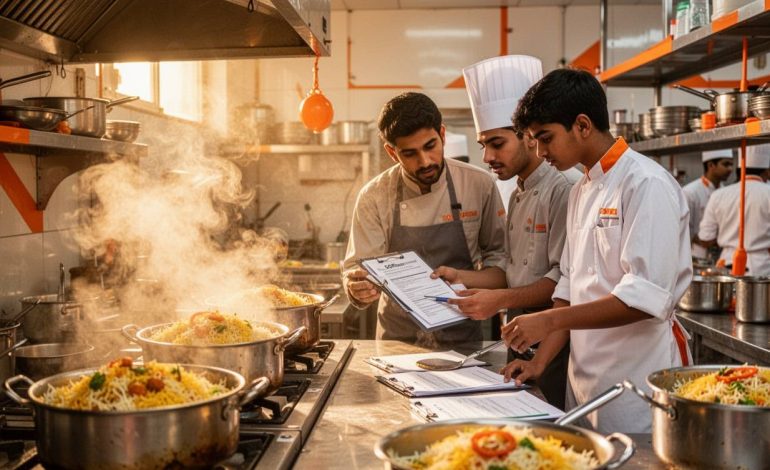
Staff Training Systems for Consistent Quality
In the bustling kitchens of Mumbai’s dhabas or the high-volume cloud kitchen business in Bangalore, one bad biryani or inconsistent dosa can send customers packing. Staff training systems built around consistency and SOPs are the invisible backbone that turns chaotic operations into reliable revenue machines. For Indian food and beverage industry players chasing food business growth, mastering this is non-negotiable.
Why Consistency Matters in India’s Competitive Food Scene
The food industry trends in India show no signs of slowing, with the sector projected to reach $535 billion by 2025 according to a FICCI report. Yet, inconsistency in service and output remains a top complaint, eroding trust in sustainable food brands. Picture Raj, a cloud kitchen operator in Delhi, who watched his ratings plummet from 4.8 to 3.2 because his night shift team couldn’t replicate the daytime flavor profiles.
Consistency isn’t just about taste; it’s tied to food safety, where lapses can lead to FSSAI violations and shutdowns. A FSSAI data point from 2023 revealed that 28% of food samples failed hygiene standards, often due to uneven staff practices. In the food and beverage industry, where margins are razor-thin, staff training systems ensure every plate meets the mark, driving repeat business and positive reviews.
Building Robust SOPs: The Foundation of Staff Training
SOPs, or Standard Operating Procedures, are the detailed blueprints that eliminate guesswork. For a QSR chain in Hyderabad, implementing SOPs for grilling kebabs reduced preparation time by 15% while boosting flavor uniformity. food business consultants often stress that SOPs must cover everything from ingredient portioning to plating aesthetics.
Start with role-specific SOPs tailored to your operation, whether it’s a fine-dining spot or a cloud kitchen business. Turnkey Food Factory Consultants recommend documenting steps visually, using photos of perfect idlis or samosas, so even new hires grasp expectations instantly. This approach aligns with food technology trends, where digital SOP libraries accessible via apps keep everyone on the same page.
Key Elements of Effective SOPs
- Clear, step-by-step instructions with timelines and quality checks.
- Visual aids like videos for complex tasks such as tandoor management.
- Integration of food safety protocols to comply with FSSAI norms.
Proven Staff Training Systems for Lasting Results
Standardized training modules are game-changers, as seen in global best practices adapted for India. eLeaP’s insights highlight how learning management systems deliver uniform content, ensuring staff across shifts maintain consistency. In Pune, a cafe owner using such a system cut customer complaints by 40% within months.
Peer mentoring pairs seasoned cooks with rookies, fostering hands-on learning. Rajiv, a restaurant setup consultants veteran, notes: Every successful kitchen has its gurus – those all-stars who pass the torch. This mirrors train-the-trainer programs, where top performers certify others, scaling expertise without constant owner oversight.
Food technology like LMS platforms tracks progress, with quizzes on SOP adherence. For cloud kitchen business owners, this means remote monitoring of satellite units, ensuring Delhi standards match Chennai outputs. food processing consultants emphasize blending on-the-job training with digital refreshers for skills like manual handling in high-pressure environments.
Leveraging Experts for Tailored Training Solutions
Restaurant consulting services can accelerate your setup. Food Consultant Services from specialists like Food Factory Consultant or qsr consultants provide customized programs. Imagine a bakery consultants team revamping a Gurgaon outlet’s dough-kneading SOPs, lifting output quality overnight.
food processing plant consultancy Services integrate automation training, vital for scaling. A recent FoodNavigator report states that 65% of Indian food processors plan tech upgrades by 2026, demanding staff upskilling. Partnering with food and beverages consultants ensures your team stays ahead of food industry trends.
Actionable Recommendations for Implementation
- Conduct weekly SOP drills with role-playing scenarios to simulate peak hours.
- Roll out a digital LMS for bite-sized modules on food safety and consistency.
- Appoint SOP champions from each shift, rewarding top performers quarterly.
Overcoming Common Hurdles in Staff Training
High turnover plagues India’s food sector, with 70% annual churn per EIT Food analysis. Counter this with modular training that onboards fast. Feedback loops, via quick post-shift surveys, refine SOPs continuously.
For sustainable food brands, tie training to career paths – promote consistent performers to supervisors. food product development consultants advise gamifying modules with leaderboards to boost engagement in the cloud kitchen business.
Frequently Asked Questions (FAQs)
How can small cloud kitchen operators in India afford advanced staff training systems?
Start lean with free tools like Google Workspace for SOP docs, then scale to affordable LMS like local apps. Food Business Experts recommend phased rollout – train core team first, then replicate. Government schemes via FSSAI offer subsidies for food safety training, making consistency achievable without breaking the bank.
What role does food technology play in maintaining SOP consistency across multiple outlets?
Apps centralize SOPs with real-time updates and video demos, perfect for chains. Track completion via dashboards, flagging laggards instantly. In India’s food and beverage industry, this tech bridges urban-rural gaps, ensuring your Bangalore biryani tastes the same in Bhopal.
How often should we refresh staff training for evolving food safety standards?
Quarterly refreshers align with FSSAI updates, plus immediate sessions post-incidents. cafe consultant pros suggest annual full audits. This keeps your team sharp amid food industry trends like allergen labeling.
Conclusion: Train Today for Tomorrow’s Triumph
Staff training systems centered on consistency and SOPs aren’t expenses – they’re investments in food business growth. From Mumbai street-side stalls to pan-India chains, those who standardize win loyalty and scale sustainably. Ready to transform your operations? Connect with Tech4Serve for expert guidance tailored to your food venture.


