

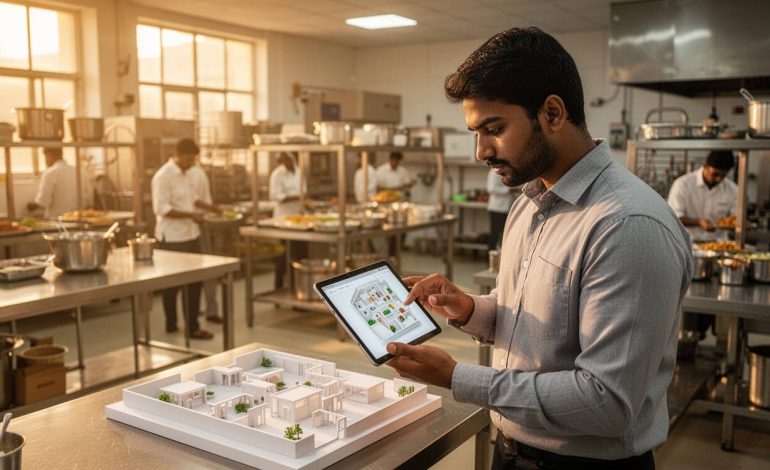
Food Factory Design and Layout Planning
Imagine a bustling cloud kitchen operator in Mumbai staring at skyrocketing orders but bottlenecked by a cramped, inefficient production floor that turns fresh opportunities into frustrating delays. In India’s rapidly expanding food and beverage industry, where the market is projected to reach $535 billion by 2025 according to a FICCI report, getting your factory design and layout right is not just smart-it’s the lifeline for food business growth. This guide dives deep into strategic planning that aligns with food safety standards and fuels sustainable food brands.
Why Factory Design and Layout Matter in the Indian Food Sector
The food industry trends in India are shifting fast, with rising demand for processed snacks, ready-to-eat meals, and frozen products driving entrepreneurs toward scalable production setups. A poorly planned layout leads to cross-contamination risks, higher operational costs, and compliance headaches with FSSAI regulations. As one leading Food Factory Consultant notes, Proper factory design turns chaos into a symphony of efficiency, minimizing waste and maximizing output.
Consider Rajesh, a restaurant owner in Delhi expanding into a full-fledged processing unit for his popular chaat mixes. His initial setup ignored unidirectional flow, resulting in frequent hygiene violations and lost batches. Partnering with Turnkey Food Factory Consultants helped redesign the space, boosting throughput by 40% while ensuring food safety. Such stories highlight how thoughtful layout planning supports everything from cloud kitchen business to large-scale manufacturing.
Key Principles of Effective Factory Design
At the heart of any successful factory design lies workflow optimization, zoning for risk levels, and scalability. Food processing plants must separate raw material intake from finished goods to prevent contamination, adhering to GMP standards outlined by the FSSAI. Unidirectional flow-from dirty to clean zones-keeps operations smooth and safe.
Zoning Strategies for Hygiene and Efficiency
Divide your facility into primary processing, secondary packaging, utilities, warehousing, and administrative areas, as recommended in digital 3D layout models for food processing. Wet and dry zones must remain distinct, with pressure differentials and dedicated HVAC systems. For Indian businesses handling spices or dairy, this zoning is crucial amid humid climates that amplify microbial risks.
Incorporate tourable pathways and employee amenities, a trend emphasized by CRB Group experts for modern plants. Separate visitor corridors prevent disruptions, vital for investor pitches in competitive markets like QSRs and cafes.
Scalability and Flexibility in Layout Planning
Design with expansion in mind-whether adding lines for new flavors or pivoting to frozen foods. Combined layouts blending process and product flows offer flexibility, ideal for diverse portfolios in the food and beverage industry. Shiva Engineering Services exemplifies this by using simulation tools to model material movement, cutting labor costs and downtime.
Step-by-Step Guide to Food Factory Layout Planning
Planning a new facility or revamping an existing one follows four core scenarios: greenfield builds, expansions, rearrangements, or tweaks. Start with site analysis-consider topography, utilities access, and proximity to suppliers, as seen in Madhya Pradesh setups where contours impact foundation costs.
Step 1: Assess Process Flow and Space Needs
Map raw materials to finished goods, factoring in storage rotation per GMP norms. Calculate floor space using OEE metrics for true capacity. food processing consultants stress risk zoning for air direction and material handling to avoid future rework.
Step 2: Integrate Hygiene and Sanitation Features
Personnel entrances demand one-way changing rooms with hygiene stations-boot washes, hand sanitizers, and air showers. Sloping floors with drains ease cleaning, while centralized foam systems support HACCP compliance. WONE’s sanitation integrations show how this boosts food safety without eating into production space.
Step 3: Leverage Technology for Precision
Employ 3D modeling and food technology for immersive previews. VMS Consultants in Ahmedabad use networked tools for real-time value chain views, aiding decisions on equipment sizing and utilities. This tech-forward approach is key for restaurant consulting and food product development.
Actionable Recommendations for Indian Food Entrepreneurs
To turn these principles into reality, here are practical steps tailored for India’s food business landscape:
- Conduct a risk-based process audit early, engaging food processing plant consultancy Services to simulate flows and identify bottlenecks before construction begins.
- Prioritize modular designs with flexible partitioning, allowing quick adaptations for seasonal demands like festive snack surges-common in cloud kitchen business.
- Embed sustainability from day one: opt for energy-efficient utilities and waste recycling zones, aligning with global food industry trends and appealing to eco-conscious consumers building sustainable food brands.
Case Study: Transforming a Bakery’s Operations in Gujarat
A mid-sized bakery in Ahmedabad faced stagnant growth due to outdated layout causing mixing zone overlaps and contamination scares. As Food Business Experts, we collaborated as their Food Processing Consultants to redesign using GMP zoning-grey, clean, and sterile areas with controlled environments. Post-implementation, output rose 35%, and FSSAI audits passed flawlessly. This mirrors broader stats: optimized layouts can reduce utility costs by up to 20%, per a FoodNavigator analysis on plant engineering.
Frequently Asked Questions (FAQs)
What role does food safety play in factory design for Indian processors?
Food safety is the cornerstone of factory design, dictating zoning, material flows, and hygiene infrastructure to meet FSSAI mandates. For instance, separating high-risk dairy from low-risk dry goods prevents cross-contamination, while features like air showers safeguard against external pollutants-a must in dusty industrial belts like those near Kanpur.
How can cloud kitchen operators scale to full factories?
Start by auditing current layouts for scalability gaps, then consult qsr consultants or Cafe Consultants for phased expansions. Focus on modular equipment and digital twins to test layouts virtually, ensuring seamless transition without halting operations-key for food business growth in high-density markets like Bangalore.
Which tools are best for food factory layout simulations?
3D CAD software and flow simulation tools like those from Shiva Engineering stand out for modeling real-world scenarios. They predict bottlenecks and compliance issues upfront, saving lakhs in rework-perfect for food product development consultants handling diverse lines from snacks to beverages.
Building Your Future-Proof Food Factory
Mastering food factory design and layout planning positions your venture at the forefront of India’s food and beverage industry boom, where efficiency drives profitability and compliance builds trust. Do not leave growth to chance-secure expert guidance today for a layout that scales with ambition. Reach out to Tech4Serve for tailored food consulting that propels your operations forward.


