

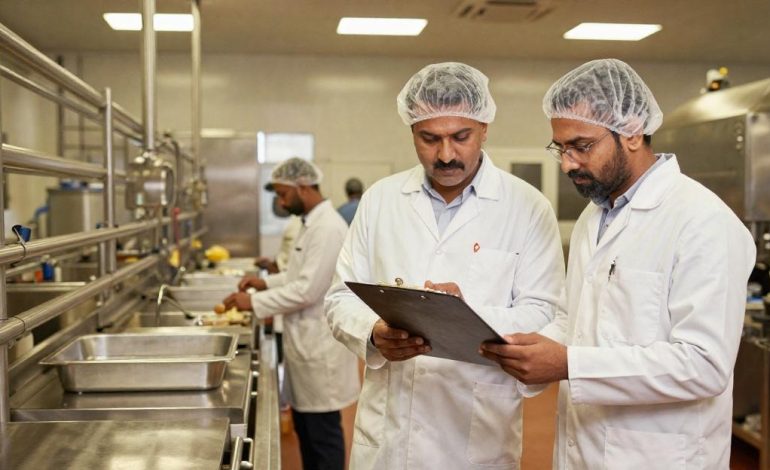
Manufacturing And Processing For Next Stage Food Business Growth
Every ambitious food brand eventually reaches the same crossroads: your recipes work, demand is rising, but your current setup simply cannot keep up. The real challenge is not just finding a bigger factory or plant, but building a smart, compliant, and scalable production system that will still work when volumes double or formats change. In the current wave of food industry trends, the winners are the brands that treat manufacturing and processing as a strategic engine, not a back end headache.
Why Your Manufacturing Strategy Determines Your Ceiling
The global food and beverage industry is scaling faster and getting more complex at the same time. A recent analysis by McKinsey highlights that productivity focused manufacturers in consumer goods can improve margins by 10 to 20 percent when they modernize operations and data across the plant. At the same time, the global market for food processing is projected to grow steadily through 2030 according to FAO, driven by urbanization, convenience foods, and retail private labels.
For a fast growing cloud kitchen business in Mumbai or a regional snack brand in Bengaluru, this means the way you design and operate your facility can either unlock new channels or keep you stuck hand holding production every day. Smart manufacturing and processing gives you:
- Higher and more predictable output from the same facility footprint
- Better food safety control across each processing step
- Lower unit costs through waste reduction and better planning
- Flexibility to launch new SKUs without rebuilding the entire plant
In other words, a well designed production setup becomes a growth lever, not just a cost center.
From Kitchen To Factory: Rethinking Scale
Scaling from chef led batches to full factory runs is not a simple matter of multiplying ingredients by 10. The physics of heating, cooling, mixing, and holding changes. Your operational risks change too. According to the Institute of Food Technologists IFT, roughly 60 percent of product quality issues in processed foods can be traced back to inconsistencies in processing conditions rather than formulation errors.
That is why serious brands increasingly work with food processing consultants or a food industry consultant early in the journey. The best Food Business Experts will stress test three critical areas before you sign any equipment purchase order.
1. Defining The Right Production Philosophy
Before the first machine is ordered, you must decide how you want the plant to behave. High automation with lower labor flexibility, or semi automatic lines with more manual intervention. If you work with a Turnkey Food Factory Consultant or experienced food factory design consultants, they will map current and future volumes, channel mix, and SKU complexity to define a production concept that fits your business rather than forcing a generic layout.
This is where food technology and restaurant consulting meet. A QSR focused brand might prioritize quick changeovers in the facility to support frequent promotions, while a frozen snacks player working with Frozen food consultants might prioritize blast freezing capacity and cold storage integration.
2. Translating Products Into Processes
Every product needs a precise processing route in the plant: receiving, pre processing, cooking or forming, cooling, packing, and dispatch. food product development consultants will usually build detailed process sheets and time temperature profiles so that what works in the R&D lab can be reproduced at 10x and 100x scale without losing quality or compromising food safety.
This translation is critical for sustainable food brands that promise clean labels and minimal processing. If your marketing claims depend on gentle processing or certain temperature limits, your factory design, utilities, and control systems must be able to deliver those conditions consistently.
3. Building For Compliance From Day One
Regulators and large buyers are tightening requirements on traceability, hygiene zoning, and allergen control. The European Food Safety Authority and similar bodies in other regions have increased guidance on cross contamination risks in mixed product plants, and the trend is moving quickly into retail procurement norms as reported by FoodNavigator.
A capable Food Factory Consultant or food consultancy service will design the facility flows, hand wash and gowning points, and raw to cooked segregation so that your plant can pass audits by large retailers or export buyers. Cutting corners here is expensive to fix later.
Designing The Factory: Layout, Flows, And Flexibility
A factory layout is not just a CAD drawing. It is a physical expression of your business model. Whether you are planning a greenfield facility or upgrading an old shed, think in terms of flows: people, product, packaging, air, and waste.
Smart Layout Principles For Food Plants
Food Processing Plant Consultancy firms often apply a few simple but powerful principles across bakery, beverage, or ready to eat facilities.
- Keep flows unidirectional from dirty to clean: receiving to processing to packing to dispatch, without crossovers
- Separate high risk zones like open product handling from low risk areas like dry warehousing
- Design utilities like steam, compressed air, and chilled water with accessible loops so that expansion or maintenance does not disrupt production
One major study from EIT Food noted that nearly 30 percent of productivity gains in upgraded plants came purely from better line balancing and layout changes, not from new equipment. Layout is strategy in physical form.
Capacity Planning And Future Proofing
Many first time manufacturers either overspend on oversized equipment or under invest and hit a ceiling within 18 months. food and beverages consultants typically model three scenarios: current demand, conservative growth, and aggressive scale.
For a growing cafe chain working with a Cafe Consultant and qsr consultants, it might make sense to build a central kitchen that runs at 60 to 70 percent utilization today but can scale volumes by 40 percent with an extra shift and minor equipment additions. The same logic applies to an Indian sweets brand or a modern bakery using Bakery Consultants to plan central production for multiple outlets.
Operational Excellence: Running The Plant Day After Day
Once the factory is built, the real work begins. Global best practice in manufacturing operations management emphasizes tight coordination between planning, procurement, production, quality, and maintenance. According to a manufacturing operations guide by Fishbowl Inventory, integrating these operational activities into a single system can significantly reduce bottlenecks and downtime across the plant.
Planning And Scheduling Around Real Demand
For most Indian food brands, demand is lumpy. Festivals, weekends, and campaigns create spikes. A well designed facility uses simple but disciplined planning practices:
- Weekly and daily production planning based on confirmed orders plus realistic forecasts
- Clear frozen horizons where recipes and formats cannot change so that procurement and production stay aligned
- Simple visual boards or digital dashboards tracking plan versus actual in real time
food business consultants often help teams move from gut feel planning to data driven schedules, especially when integrating online, modern trade, and HORECA channels.
Standardization And Training
In food processing, consistency is everything. A Food Processing Plant Consultancy Services partner will push you to invest in standard operating procedures, visual work instructions, and structured training. This is not bureaucracy. It is risk management. When line supervisors and operators follow the same methods, you reduce variability and make it easier to spot genuine process problems.
As one senior technologist quoted in a recent IFT food technology feature put it, Excellence in food manufacturing starts when the process is more predictable than the people. That shift only happens when your factory runs on defined standards, not individual habit.
Food Safety As A Daily Discipline
Effective food safety is not a one time certification exercise. It is woven into every process step, from how ingredients are received and labeled to how line changeovers are managed. Global food industry trends show buyers expecting full traceability from raw materials to finished packs, particularly for export and modern retail channels.
Food Processing Services firm leaders and Food Processing Consultants frequently focus on three building blocks:
- Robust prerequisite programs: cleaning, pest control, personal hygiene, and maintenance
- Clear HACCP plans that link critical control points to specific monitoring actions
- Routine internal audits and mock recalls to keep the system real and actionable
For cloud kitchen business operators who are now starting to invest in shared production facilities, bringing a Food beverages consultant or Food Consultant Services specialist on board can prevent food safety lapses that can otherwise grow with scale.
Technology, Data, And The Future Factory
Modern food plants are becoming data rich environments. Sensors track temperatures, flows, and machine uptime. Simple manufacturing execution systems help supervisors see where production is ahead or behind target. Industry research referenced by SafetyCulture emphasizes that companies using digital tools for routine inspections and maintenance reduce unplanned downtime and safety incidents significantly.
Where Food Technology Delivers Real ROI
Not every plant needs full Industry 4.0 automation. But every ambitious brand can benefit from targeted digital investments:
- Digital batch records and checklists to reduce paperwork and improve traceability
- Simple OEE (overall equipment effectiveness) tracking to quantify line performance
- Barcode or QR based inventory control in raw, WIP, and finished goods stores
food consulting and Food Processing Plant Consultancy experts often propose phased technology roadmaps so that your plant can adopt new tools without overwhelming teams. For example, a regional namkeen brand might start with digital quality checks and labeling, then add planning and traceability modules once the team is comfortable.
Sustainability And Resource Efficiency
Investors and consumers are rewarding sustainable food brands that treat resource efficiency as a core design parameter. That starts in the factory: energy efficient boilers and ovens, heat recovery from exhaust, water reuse where regulations permit, and reduction of product loss at filling and packing.
Forward looking Food Consultants and Food Industry Consultant teams are increasingly building business cases that quantify savings from energy and waste projects. In many plants, small changes to cleaning in place cycles, compressed air management, or product changeover procedures can deliver savings that rival headline capex projects.
Frequently Asked Questions (FAQs)
Below are practical questions food entrepreneurs and operators regularly ask when planning or upgrading a manufacturing facility.
How do I know if it is time to move from a rented kitchen to a dedicated production facility
In simple terms, the time to move is when your existing setup is holding back confirmed demand or creating excessive operational firefighting. If you are running multiple shifts in a small kitchen, turning away B2B orders, or struggling to maintain food safety and consistency, a dedicated plant or central kitchen becomes a growth enabler rather than a cost. A structured assessment with Food Business Experts or Restaurant Setup Consultants can quantify your current capacity, highlight compliance gaps, and model payback on a new facility so that you are not relying on instinct alone.
What is the first step before engaging Food Processing Plant Consultancy Services
The most valuable first step is to clarify your business strategy for the next three to five years. That means defining product categories, target markets, expected volume ranges, and channels such as retail, HORECA, or cloud kitchen business partnerships. When you come to Food Processing Plant Consultancy or Food Processing Consultants with this clarity, they can design a factory and processing approach that fits your growth path, instead of simply copying layouts from a different category or scale. This upfront thinking also keeps design fees and project timelines under control.
How can small or medium food brands afford expert Food Consultants
Many food businesses assume expert Food Consultants or Food Business Consultants are only for large corporations, but the market has evolved. Today you can engage Food Consultant Services or food processing consultancy services on a phased basis: a short diagnostic, a layout review, or a limited scope HACCP design. Some consultants structure fees linked to milestones or savings from improved operations. For an MSME manufacturer, even a modest engagement can prevent costly design mistakes, equipment mismatches, or compliance failures that would be far more expensive to correct later.
Should a QSR brand or cafe invest in its own factory or outsource manufacturing
There is no one size fits all answer, but there are clear variables to consider. If your menu relies on highly proprietary recipes or processing techniques, owning at least a core production facility can protect IP and ensure consistency across outlets. For more standard items, co manufacturing can be a smart bridge. Many qsr consultants and Cafe Consultant teams advise a hybrid model: outsource stable, high volume SKUs and use your own plant or central kitchen for innovation, sensitive products, and emergency capacity. The decision should be reviewed regularly, as volumes, food industry trends, and supply risks change.
What skills do I need in house once a new factory starts
New plants often fail to deliver expected benefits because the team mix is wrong. You need more than a strong production manager. A robust setup will include supervisors who understand both process and food safety, a maintenance lead comfortable with utilities and automation, at least one food technologist for quality and product troubleshooting, and a planning or supply chain coordinator. A Food Industry Consultant or food beverages consultant can help you map these roles and design an organization structure that matches your plant size and complexity so you do not end up overstaffed in admin but under resourced on the shop floor.
Building The Right Plant With The Right Partner
Manufacturing and processing are no longer backend activities that can be figured out later. In the modern food and beverage industry, your factory is the physical engine of your brand promise. It is where food safety and quality are either protected or compromised, where unit economics are either improved or eroded, and where your ability to respond to new food industry trends is either enabled or blocked.
Whether you are planning your first dedicated facility or scaling an existing plant to serve new geographies, you do not need to navigate the complexity alone. Partnering with experienced Food Factory Consultant teams, Food Factory design consultants, and integrated Food and Beverages Consultants can help you translate ambition into a robust, compliant, and future ready operation.
If you are ready to explore how a thoughtfully designed manufacturing facility can accelerate your food business growth, reach out to the specialists at Tech4Serve. With deep experience across Food Processing Plant Consultancy Services, food consulting, and turnkey factory projects, they can help you move from ideas on paper to a plant on ground that is built to scale.


