

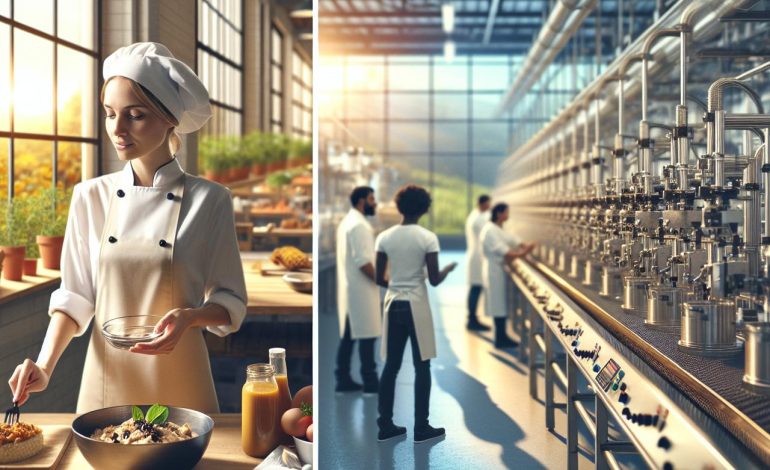
Manufacturing & Processing: Turning Recipes Into Reliable, Scalable Production
The real test of a food brand is not the first great batch, it is the thousandth batch that still tastes the same. As food and beverage industry leaders scale from kitchen counter to full fledged plant, the factory floor becomes the true heartbeat of food business growth. This is where smart manufacturing, disciplined processing, and future ready facilities separate sustainable food brands from the rest of the pack.
Why Your Factory Strategy Is Now Your Brand Strategy
One cloud kitchen business in Bengaluru spent two years perfecting its festive biryani and dessert menu, only to stumble when a sudden spike of 5x Diwali orders exposed bottlenecks in its outsourced central kitchen. Orders got delayed, quality wobbled, and reviews took a hit. The lesson was clear – if your manufacturing and processing backbone is weak, no amount of marketing, packaging, or PR can save you.
Across global food industry trends, operational excellence inside the food processing plant or production facility is now a core brand differentiator. According to the Deloitte 2026 manufacturing outlook, manufacturers globally are doubling down on smart manufacturing and AI to improve output and productivity, with many investing over 20 percent of their improvement budgets in digital and data solutions[Deloitte]. For the food and beverage industry, that same focus on the factory and processing line is the difference between a regional niche player and a scalable national or international brand.
Food Factory Consultant teams, Frozen food consultants, food processing consultants and broader food business consultants are increasingly being called in not just to “fix” plants but to design them from the ground up for agility, traceability, and compliance. In other words, how you build and run your facility has become your strategy in action.
Designing The Right Type Of Food Facility For Your Business Model
No two food factories are the same. A high volume QSR chain, a premium bakery brand, and a frozen snack exporter will require very different factory design logics, even if they share the same city. Smart food factory design consultants start not with the building, but with your menu strategy, target markets, shelf life, and price point.
Centralized Production For Restaurants, QSR, And Cloud Kitchens
One restaurant group in Mumbai, working with qsr consultants and Restaurant Setup Consultants, discovered that the fastest route to consistency was not adding more kitchen outlets, but creating a compact, HACCP compliant central production facility. Sauces, gravies, bakery bases, and marinated proteins were produced in a single plant, then distributed chilled or frozen to outlets and virtual brands.
This is where a Turnkey Food Factory Consultant or an experienced food industry consultant earns their stripes – specifying process flow, zoning (clean vs unclean), raw material receiving docks, blast freezing areas, dispatch bays, and integration with your cloud kitchen business logistics. The result is lower wastage, faster service times, and a tighter grip on food safety.
Export Oriented And Packaged Foods Plants
For brands eyeing exports or modern trade distribution, factory and processing requirements become more stringent. Food processing consultancy services often begin with market mapping – which certifications are needed (FSSAI, BRCGS, ISO 22000, retailer audits), what packaging formats are viable, and how automation should be phased as volume grows.
According to the Food and Agriculture Organization and global analyses highlighted by FoodNavigator, food systems are under increasing pressure to deliver safer, more sustainable, and more affordable products at scale. This raises the bar on how food processing plants are planned and operated, from cleaning in place (CIP) design to allergen management zones. Food Processing Plant Consultancy and Food Processing Plant Consultancy Services are now deeply intertwined with compliance and export-readiness, not just machinery selection.
Future Ready Food Factories: Technology, Data, And Automation
The same digital trends transforming general manufacturing are washing over the food sector. A 2025 analysis of global manufacturing trends reported that about 72 percent of North American manufacturers have adopted IoT enabled smart systems, and 81 percent of executives plan to increase AI investments in the next three years to drive competitiveness[HireQuest]. While food factories operate under stricter hygiene and regulatory constraints, the direction of travel is unmistakable.
Key Technology Shifts Affecting Food Processing Plants
Leading food and beverages consultants and food consulting specialists are helping brands phase in technology in practical, ROI focused ways:
- Industrial IoT and sensors – From temperature and humidity loggers in cold rooms to vibration monitoring on critical mixers, connected devices enable predictive maintenance and continuous food safety monitoring.
- AI supported planning – Agentic AI tools can optimize production schedules, raw material call offs, and labor allocation by learning from historical sales, seasonal patterns, and festive peaks. Deloitte notes that smart manufacturing is seen as a primary driver of competitiveness in the coming three years[Deloitte].
- Digital batch records and traceability – Cloud based MES and ERP systems give Food Business Experts real time visibility from raw material receiving to finished goods dispatch, supporting recalls, audits, and sustainability reporting.
As one senior operations head at a leading Indian snack manufacturer put it, “The factory is no longer a black box at the edge of the business. It is a data center with steam, chilled water, and stainless steel.” food product development consultants now routinely work side by side with plant engineers and Food Consultants to ensure new SKUs are manufacturable at scale without disrupting existing lines.
Scaling Without Losing Quality: The Operational Playbook
There is a common fear among founders: the day we move from our original kitchen to a big facility, we will lose the soul of the product. The truth is more nuanced. With the right food processing consultancy services and Food Consultant Services, scaling can actually make your quality more reliable, provided you translate “chef intuition” into repeatable operating standards.
Three Practical Levers For Reliable Scale Up
- Codify your process in obsessive detail – Move beyond recipes to process specifications: exact cooking times, temperatures, equipment settings, cooling curves, and hold times. Restaurant consulting teams often film master runs with chefs and then co create standard operating procedures that can be trained and audited.
- Design for the worst day, not the average day – Festive spikes, supply chain delays, and equipment breakdowns are part of life in the food business. Food Processing Services firms and Food Factory Consultant teams factor in buffer capacity, spare critical utilities, and contingency plans, so your plant stays reliable when the pressure is highest.
- Phase automation intelligently – Rather than jumping to full automation on day one, many successful sustainable food brands start with semi automatic lines, then layer in robotics, automated packing, or high speed form fill seal machines as demand grows. This protects cash flow and lets teams adapt gradually.
For a cafe chain working with a Cafe Consultant and Bakery Consultants, the answer to scale was not turning everything into industrial products, but centralizing high variability elements (like laminated doughs and par baked breads) while retaining final baking and finishing at outlet level. This hybrid approach kept aroma and freshness at the point of sale while improving overall consistency and wastage.
Food Safety And Compliance: The Non Negotiable Foundation
Even as automation and AI transform factories, the fundamentals of food safety are non negotiable. According to the World Health Organization, unsafe food causes an estimated 600 million cases of foodborne illnesses and 420,000 deaths every year worldwide, with children being particularly vulnerable[WHO]. For Indian and global brands, a single incident can damage years of careful brand building.
Food Factory design consultants and Food beverages consultant teams therefore start every plant design with hygienic zoning, people and material flow, and validated cleaning regimes. Key pillars include:
- Clear segregation of raw and cooked zones to prevent cross contamination.
- Controlled personnel movement with color coded PPE and hand wash checkpoints.
- Validated cleaning and sanitation protocols for each equipment and area.
- Robust supplier approval and raw material testing programs aligned with recognized standards such as those taught by the Institute of Food Technologists (IFT).
For cloud kitchen business operators and QSR brands, central production facilities turn into risk concentrators – one lapse can impact hundreds of outlets or thousands of orders. Food consultancy service providers with strong food technology depth help teams internalize hazard analysis, CCP monitoring, allergen control, and environmental monitoring so that compliance is a culture, not a binder on the shelf.
Sustainability, Energy, And The New Economics Of Food Plants
Another shift in global food industry trends is the rise of sustainability as a core design constraint for factories and processing plants. EIT Food and other European initiatives point out that consumers and regulators are increasingly demanding proof of responsible sourcing, climate friendly operations, and waste minimization across the food chain[EIT Food].
For sustainable food brands, this means tackling efficiency in a structured way:
- Energy and utilities – Optimizing boiler efficiency, implementing heat recovery, using variable frequency drives on motors, and shifting to more efficient refrigeration systems can materially cut cost per kg produced.
- Water and effluent – Designing plants for lower water consumption, capture of condensate, and robust effluent treatment is no longer optional for serious food and beverage industry players.
- Waste and by product valorization – Food consulting and Food Processing Plant Consultancy Services often include mapping streams of peel, trim, whey, or spent grain that can be converted into new products, animal feed, or energy.
Critically, sustainability is not only about being “green”. Done right, it improves resilience and margins. In a world of volatile input costs and growing regulatory scrutiny, factories that use less energy, less water, and generate less waste gain a structural competitive advantage.
Choosing The Right Partners For Your Factory Journey
Moving from pilot kitchen to manufacturing plant is one of the highest risk, highest reward transitions in any food company. Every wrong decision – from site location to line configuration – can lock in costs for a decade. This is why many founders and corporates engage Food Business Experts early, rather than treating a plant build as a one time construction project.
Top performing brands typically blend three layers of expertise:
- Strategic Food Industry Consultant support – Clarifying product portfolio, long term volumes, and channel mix, so the plant is sized and staged correctly.
- Technical Food Processing Consultants and food processing consultancy services – Translating recipes and concepts into robust processes, equipment selection, capacity balancing, and validation runs.
- Implementation partners – Turnkey Food Factory Consultant teams and engineering specialists that can deliver on time, food safe facilities with integrated utilities and automation.
Indian restaurant consultant teams, Food Consultants, and Food Product Development Consultants are also invaluable in de risking innovation. They help ensure new products can be manufactured without expensive changeovers or quality instability, especially across diverse cuisines and seasonal festive offerings.
Bringing It All Together: From Pilot To Plant With Tech4Serve
If you step back, manufacturing and processing are not side stories in your business – they are the main plot. The factory, plant, or central kitchen is where your brand promise is converted into tangible, repeatable experiences for customers. In a hyper competitive food and beverage industry shaped by rapid food technology advances, shifting food industry trends, and rising expectations around food safety and sustainability, the brands that win will be those that treat their facilities as living, evolving strategic assets.
Whether you are scaling a regional snack label into a national player, building a central kitchen for a multi city cloud kitchen business, or retooling an existing plant for cleaner labels and sustainable food brands positioning, you do not have to walk that road alone. As one seasoned operations leader said, “In factories, experience saves you money twice – once in what you build, and again in what you avoid building.”
If you are ready to translate your recipes into robust, efficient, future ready production, this is the moment to rethink how your factory, processing line, or plant is designed and run. Partnering with Food Factory Consultant experts, Food Processing Plant Consultancy specialists, and end to end Food Business Experts can compress your learning curve by years. To explore how a dedicated food consulting and Food Processing Services firm can help you scale with confidence, connect with the team at Tech4Serve and start architecting the manufacturing backbone your brand truly deserves.
Frequently Asked Questions (FAQs)
How do I know when it is time to move from a commercial kitchen to a dedicated food processing plant?
The signal usually shows up long before you sign a factory lease: lead times start stretching, staff spend more time firefighting than improving, and your cloud kitchen business or restaurant chain begins turning down opportunities because “operations cannot handle it”. From a food business growth perspective, it is time to evaluate a dedicated facility when your baseline demand is stable enough to justify fixed overheads, and when incremental volume can significantly reduce unit costs. A Food Industry Consultant or Food Business Consultants can run scenario models on capacity, capex, and operating costs to help you decide the right time, size, and location for your first plant.
What are the biggest mistakes brands make when designing their first food factory?
Common mistakes include designing around today’s SKUs instead of anticipated food industry trends, underestimating the utilities (steam, power, chilled water) needed for future automation, and treating food safety as an afterthought. Many first time founders also buy equipment before mapping process flow, which can result in bottlenecks and high changeover times. Engaging experienced Food Factory design consultants, Food Processing Consultants, or a Turnkey Food Factory Consultant early helps align layout, line design, food technology constraints, and compliance requirements from day one, reducing expensive rework later.
How can smaller brands afford advanced technology and automation in their factories?
Advanced factory technology is not an all or nothing game. Smaller sustainable food brands can start with targeted investments that directly support food safety and reliability, such as digital temperature logging, simple MES systems, or semi automatic fillers. Many solutions are now cloud based and available as services, which lowers upfront costs. Working with Food Consultants, food consultancy service providers, or Food Processing Plant Consultancy Services can help you prioritize a roadmap that blends quick wins with longer term automation, while taking advantage of government incentives and schemes listed on national portals like food processing and MSME support programs on official government sites[Ministry of Food Processing Industries, India].
What role does restaurant consulting play in manufacturing decisions for a multi outlet brand?
For multi outlet QSRs, casual dining chains, and cafe concepts, restaurant consulting and Cafe Consultant teams bridge the gap between menu strategy and factory reality. They help decide which elements should be centralized in a food processing facility (gravies, bases, bakery items) versus prepared fresh in outlet kitchens, ensuring that brand experience, service time, and food safety are all optimized. By collaborating with Food and Beverages Consultants and Food Product Development Consultants, they also ensure that new menu items are designed with scalable manufacturing and distribution in mind, whether the brand uses a central kitchen model, a full scale processing plant, or a hybrid approach.


