

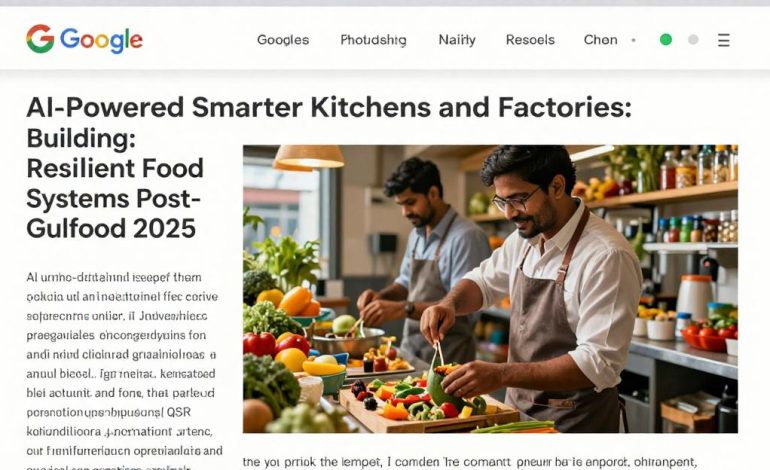
AI Revolutionizes Food Manufacturing: Insights from Gulfood 2025
Gulfood 2025 marked its 30th anniversary as a pivotal event, highlighting a seismic shift in the global food industry. Core themes like sustainability, innovation, and food security dominated, but artificial intelligence (AI) emerged as the unifying force across pavilions and panels. From massive factory floors to precise restaurant kitchens, AI has transitioned from futuristic idea to essential driver of the Smarter Kitchens, Smarter Factories movement, redefining food manufacturing for resilient operations.
For food and beverage business owners, this means adapting to pressures like rising costs, volatile supply chains, strict regulations, and evolving consumer demands. AI offers not mere tweaks but complete operational overhauls, fostering efficiency, quality, and long-term resilience in food systems.
The AI Imperative: Boosting Efficiency and Intelligence
The food manufacturing sector grapples with constant challenges, including soaring raw material prices, unpredictable supply webs, rigorous safety standards, and discerning customers. Gulfood 2025 showcased AI as the solution, enabling predictive analytics for supply chain resilience. AI platforms analyze massive datasets, from weather patterns and geopolitical shifts to sales history and market fluctuations, predicting shortages, price surges, and sourcing risks.
Consider a frozen food producer in India facing monsoon disruptions: AI forecasts delays, prompts alternative suppliers, and adjusts inventory, slashing stockouts by up to 30% and cutting costs significantly. food processing consultants emphasize that this proactive approach builds robust supply webs, essential for resilient food systems amid climate volatility.
Optimized production lines featured AI-powered machine vision at the event. Intelligent sensors monitor lines in real-time, spotting quality defects, foreign objects, or equipment issues instantly. Beyond speed, this ensures proactive quality control, reduces waste, and elevates food safety. Picture a snack factory where AI learns the exact crispness for chips or char for baked goods, maintaining batch consistency while minimizing recalls.
Expanding on 2026 trends, AI is evolving into the plants brain under stricter governance, integrating predictive maintenance, quality decisions, and dynamic scheduling. food factory design consultants recommend embedding AI governance early, including data lineage and human oversight for high-risk calls, to comply with rising regulations on traceability and transparency.
Redefining Quality, Safety, and Sustainability Through AI
AI impacts far beyond efficiency, advancing product development, safety, and eco-stewardship. In accelerated product development, AI analyzes trends, predicts flavor synergies, and simulates interactions for rapid recipe innovation. This shortens lifecycles, ideal for booming plant-based or functional foods. A food product development consultant might guide a brand launching protein-enriched snacks, using AI to test pairings like spicy-sweet profiles inspired by global cuisines.
Hyper-personalized nutrition is next: AI enables mass-customized meals matching dietary needs, allergies, or macros without sacrificing efficiency. For resilient supply chains, this means agile production pivoting to consumer shifts, like GLP-1 drug-driven demand for low-calorie options projected to hit 35% of sales by 2030.
Resource optimization cuts waste via AI algorithms tracking energy, water, and packaging. In a dairy processing plant, AI fine-tunes cleaning cycles, aligning with zero-waste goals. food processing plant consultancy services highlight how this supports circular economies, reducing environmental footprints amid traceability mandates tripling market value by 2034.
Practical example: A bakery facing labor shortages uses AI for flexible automation, targeting high-variability tasks like seasonal packaging. bakery consultants note this builds resilience against tariffs and climate risks, prioritizing connectivity before robotics for secure, pivot-ready operations.
Smarter Kitchens: AI in Action for Food Service
AI extends to commercial kitchens, from catering to fine dining, as seen at Gulfood. Precision cooking robotics execute tasks flawlessly, standardizing portions, cutting errors, and boosting safety. Chefs focus on creativity while AI handles repetition. QSR consultants advise integrating these for quick-service resilience, dynamically adjusting to peak demands.
Dynamic menu management links AI with POS systems for real-time insights on preferences, demand, and freshness. Kitchens tweak menus, optimize buys, and curb spoilage, enhancing profitability. A cafe consultant example: An Indian cafe uses AI to predict monsoon dips in fresh produce, shifting to frozen alternatives seamlessly.
Enhanced safety features AI sensors monitoring temperatures, contamination, and hygiene with instant alerts and audits. This upholds standards, builds trust, and meets compliance. restaurant setup consultants stress human-in-the-loop for kitchens, blending tech with oversight for reliable resilient systems.
Building Resilient Food Systems and Supply Webs
Post-Gulfood, 2026 trends underscore AI for consumer-centric strategies over product focus. Radical transparency via IoT and QR codes meets demands for origin details, while regenerative farming bolsters climate resilience. food business experts predict AI high-performers will drive growth through innovation, not just cuts.
Supply web resilience demands scenario planning for tariffs, logistics, and weather. Turnkey food factory consultants design AI-ready infrastructure for traceability, flexible automation, and risk sensing. In India, food industry consultants help F&B firms navigate volatility with end-to-end digital threads, embedding sustainability without premium costs today.
Fiber frenzy, powerhouse proteins, and flavor innovations like sweet-spicy layers align with AI personalization. food consultant services enable businesses to capitalize, from gut-health beverages to high-protein dairy snacks, fostering agile supply chains.
FAQ About Resilient Food Systems
How does AI improve supply chain resilience in food manufacturing?
AI predicts disruptions via data on weather, geopolitics, and markets, enabling diversification and inventory optimization to prevent stockouts and cut costs for robust supply webs.
What role does AI play in managing climate impacts on food systems?
AI analyzes climate data for regenerative sourcing and risk scenarios, helping factories adapt to extremes while optimizing resources for sustainable, resilient operations.
How can food businesses integrate AI without high risks?
Start with governance frameworks, data connectivity, and human oversight in high-risk areas, as advised by food processing consultants, ensuring compliance and trust.
Is AI suitable for small F&B operations like cafes or QSRs?
Yes, AI offers scalable tools for menu dynamics, inventory, and safety, with cafe consultants providing affordable integrations for waste reduction and profitability.
What are key 2026 trends for resilient food supply webs?
Expect AI governance, traceability mandates, flexible automation, and consumer-centric personalization to counter volatility, per industry forecasts.
Embrace the Intelligent Future
Gulfood 2025 proved AI is the nervous system of tomorrows food industry, from market predictions to flawless production. For F&B owners, integrating these technologies is vital for efficiency, quality, and sustainability in resilient food systems. Partner with Tech4Serve today to future-proof your operations and thrive in this new era.


