

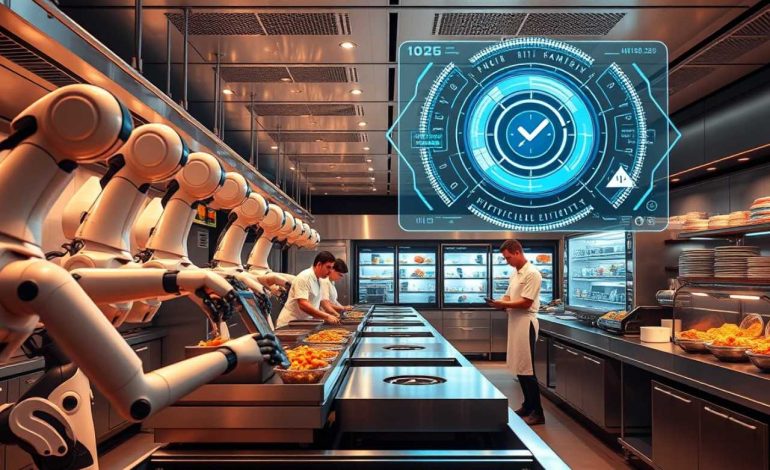
AI and Automation in the Food Industry: The 2026 Game-Changer
Imagine a kitchen where robots flip burgers flawlessly, AI predicts demand to slash waste by 30%, and chatbots handle orders with human-like charm—this isn’t sci-fi, it’s the new reality powering food industry trends in 2026. As cloud kitchens and restaurants race to stay ahead, artificial intelligence is shifting from experimental pilots to everyday practice, transforming the food and beverage industry like never before. Forward-thinking leaders are harnessing this food technology to fuel food business growth, and the results are nothing short of revolutionary.
Why AI is Moving from Pilot to Practice in 2026
The Institute of Food Technologists (IFT) has pinpointed AI’s transition from pilot projects to full-scale implementation as the top trend shaping 2026, driven by mounting pressures like climate change, resource scarcity, and consumer demands for efficiency. IFT outlines top 5 food industry trends for 2026 IFT Chief Science Officer Brendan Niemira notes, “Our food system is under pressure like never before,” emphasizing how AI turns challenges into opportunities for innovation in restaurant consulting and beyond. In the food and beverage industry, this means AI isn’t just a buzzword—it’s a survival tool for sustainable food brands navigating geopolitical disruptions and rising costs.
Statistics underscore the urgency: according to Statista, the AI market in food service is projected to reach $13.7 billion by 2028, growing at a CAGR of 24.1%. Meanwhile, a FoodNavigator report highlights how digital tools are accelerating food safety adoption, with AI enabling real-time traceability that boosts consumer trust amid regulatory pressures.
Transforming Cloud Kitchen Business Models with Automation
Cloud kitchen business models are evolving rapidly, thanks to AI-driven automation that optimizes everything from inventory to delivery routing. Picture virtual brands churning out personalized meals without human error—AI algorithms forecast peak hours, adjust menus dynamically, and even suggest recipe tweaks based on sales data. This food technology edge is crucial for food business growth, especially as delivery-only concepts dominate urban markets.
In practice, companies like Reza, Tech4Serve are pioneering AI integrations for cloud kitchens, reducing operational costs by up to 25%. Automation handles repetitive tasks like portioning and packaging, freeing staff for creative menu engineering while ensuring food safety through predictive analytics that flag contamination risks before they escalate.
Real-World Wins: Case Studies in AI-Powered Kitchens
Take Sweetgreen, which uses AI for demand forecasting, cutting food waste by 20%—a model ripe for cloud kitchen operators. Similarly, Domino’s leverages AI voice assistants for seamless ordering, boosting loyalty in a competitive landscape. These examples show how restaurant consulting can guide F&B leaders to adopt AI without overhauling their setups.
Boosting Food Safety and Traceability with Digital Tools
Food safety is non-negotiable, and AI is supercharging traceability in 2026. Digital tools monitor supply chains in real-time, using blockchain and sensors to track ingredients from farm to fork. IFT predicts this will expand adoption dramatically, helping sustainable food brands comply with clean label regulations while minimizing recalls.
One stat paints the picture: the FDA reports that AI-enhanced systems have reduced contamination incidents by 40% in pilot programs. For restaurant founders and cloud kitchen operators, this means fewer headaches and stronger compliance, positioning them as leaders in food safety.
Practical Tips to Integrate AI and Automation Today
Ready to ride this wave? Here are actionable steps tailored for food and beverage business owners, drawn from industry best practices:
- Start Small with Predictive Analytics: Implement affordable AI tools like those from EIT Food to forecast demand and optimize inventory, potentially saving 15-20% on waste right away.
- Automate Routine Tasks: Deploy robotic arms for prep work in cloud kitchens—brands like Moley Robotics offer plug-and-play solutions that integrate with existing setups, enhancing efficiency without massive capex.
- Leverage AI for Personalization: Use chatbots and recommendation engines to customize orders, increasing upsell rates by 10-15% as seen in major chains.
- Partner for Expertise: Work with Food Business Consultants or Restaurant Setup Consultants to audit your operations and pilot AI without risks.
Overcoming Challenges: Regulatory and Adoption Hurdles
While exciting, AI rollout faces hurdles like regulatory pressures reshaping innovation pipelines, as per IFT. Data privacy, workforce upskilling, and high initial costs loom large, but solutions exist. Restaurant consulting firms recommend phased implementations, starting with low-risk areas like ordering systems.
For cloud kitchen business models, the key is hybrid approaches—AI augments human roles, not replaces them. Training programs from bodies like the National Restaurant Association can bridge skill gaps, ensuring smooth transitions.
Future-Proofing Your Food Business with AI
Looking ahead, AI will intertwine with other food industry trends like sustainability and personalization, creating hyper-efficient operations. Bakery Consultants and Food Processing Consultants are already embedding food technology to drive profitability, from dynamic pricing to waste-to-energy systems.
As we embrace 2026, visionary leaders will view AI not as a cost, but as the engine for food business growth. Whether you’re scaling a cloud kitchen or revamping a dine-in spot, this tech promises resilience in a volatile world.
The Road Ahead: Motivating Innovation and Partnership
In the words of industry pioneers, \”The future belongs to those who prepare for it today.\” Don’t just survive the shifts—thrive by integrating AI into your strategy. Connect with Tech4Serve, your trusted partner in restaurant consulting, cloud kitchen business models, and food technology implementations, to unlock exponential growth. Let’s turn tomorrow’s trends into your success story.
Frequently Asked Questions (FAQs)
What are the top benefits of AI for cloud kitchens?
AI optimizes demand forecasting, reduces food waste, and streamlines operations, cutting costs by up to 25% while enhancing food safety through real-time monitoring—essential for food business growth in competitive markets.
How can small restaurants afford AI automation?
Start with cloud-based SaaS tools offering free trials, like those from Google Cloud or AWS, scaling as ROI materializes. Restaurant consulting experts recommend budgeting 5-10% of revenue initially for quick wins in menu optimization and ordering.
Will AI replace chefs in the food and beverage industry?
No, AI augments creativity by handling mundane tasks, allowing chefs to focus on innovation. According to IFT, it’s about collaboration, boosting efficiency without job losses when implemented thoughtfully.
How does AI improve food safety and traceability?
AI uses sensors and blockchain for end-to-end tracking, predicting risks and ensuring compliance. This trend, highlighted in IFT’s 2026 outlook, minimizes recalls and builds consumer trust in sustainable food brands.


