

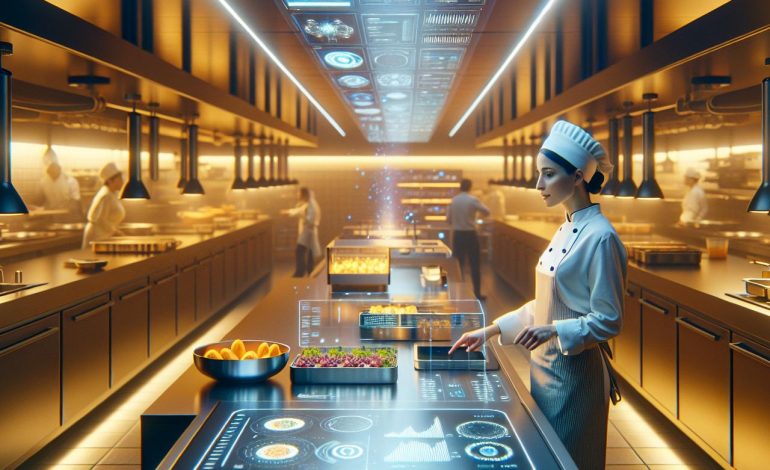
AI and Automation in Restaurant and Cloud Kitchen Operations
The most exciting revolution in the food and beverage industry right now isn’t happening on the plate—it’s happening in the data, devices, and decisions behind every order. From AI-driven prep lists to computer vision on the fryer line, automation is quietly rewriting what a ‘kitchen’ looks like. For founders and operators, the question is no longer “Will AI matter?” but “How fast can we turn it into profitable reality?”
Why AI Is Moving From Buzzword to Backbone in F&B
In its latest outlook, the Institute of Food Technologists (IFT) names artificial intelligence and tech-enabled traceability as core food industry trends shaping 2025, from R&D labs to restaurant kitchens. AI is being used to accelerate product development, optimize menus, and strengthen food safety systems, while automation is reducing reliance on unpredictable labor and human error.
According to global trends insight firm Innova Market Insights, AI is now being deployed across the value chain to create formulations, automate production, and ensure food safety and sustainability. At the same time, a Mintel trends release notes that consumers want technology to be ‘humanised’—they will embrace tech that clearly results in better taste, nutrition, and trust.
One multi-brand cloud kitchen in Bengaluru recently discovered that their order surge on Friday nights was entirely predictable-but their prep and staffing were not. After implementing AI-based demand forecasting linked to their POS and delivery platforms, they cut stock-outs by almost 40% and reduced overtime hours noticeably, unlocking new food business growth without adding a single square foot of kitchen space.
From Line Cooks to Lines of Code: Where AI Is Delivering Real Value
1. Demand Forecasting and Prep Planning
For both restaurants and cloud kitchen business operators, the biggest early win from AI is smarter forecasting. Machine learning models can ingest historical sales data, weather, events, holidays, platform promotions, and even traffic conditions to predict dish-level demand by time slot.
IFT highlights AI’s ability to speed up insight generation and decision-making, moving beyond simple spreadsheets to dynamic, always-learning systems. IFT’s 2025 trends analysis notes that AI will increasingly support both product innovation and operational control, including in kitchens and quality control.
For operators, this means:
- More accurate batch sizes for gravies, sauces, and marinations.
- Better alignment of labor scheduling with real-time order flows.
- Reduced wastage of short-shelf-life SKUs like herbs, seafood, and premium cuts.
One QSR chain in the Middle East integrated AI into their inventory and prep planning. Within six months, they reported double-digit reductions in food waste and tighter food cost variance across outlets—proof that “the algorithm” can be as valuable as your best line cook on a busy Saturday.
2. Dynamic Kitchen Display Systems and Workflow Automation
AI-powered kitchen display systems (KDS) do much more than display orders. They can sequence tickets to minimize bottlenecks, prioritize delivery versus dine-in, and adjust cook times based on real-time congestion at each station.
In a busy multi-brand cloud kitchen, an AI-enhanced KDS might route a burger order to the least-busy grill station, delay a biryani fire by 90 seconds to sync pickup with the rider’s ETA, or flag orders at risk of late delivery. This level of orchestration is where AI and automation become the invisible ‘expediter’ running the pass.
An operations head in a Southeast Asian delivery brand summed it up: “We didn’t hire more chefs; we hired a smarter brain for the kitchen.” Ticket times stabilized, order accuracy improved, and customer complaints dropped—directly boosting ratings on aggregator apps.
3. Quality Control, Food Safety, and Traceability
The same IFT trends report notes that high-profile recalls are pushing companies to invest in tech-enabled traceability and better food safety oversight. IFT specifically calls out the role of AI in quality control and monitoring. Computer vision can assess product doneness, portion sizes, and plating consistency, while IoT sensors track temperature, humidity, and time in every step of the cold chain.
This is where AI connects to both compliance and brand trust. A central dashboard can alert operators when a cold room temperature drifts above threshold, when a batch hasn’t logged a critical control point, or when supplier performance patterns show early warning signals. These tools go hand in hand with rising expectations around food safety and clean label regulations.
Given that global consumers are becoming more aware of ingredients, processing, and safety—as documented in trend analyses by NielsenIQ—traceability is not just a checkbox; it’s a competitive advantage.
Numbers That Matter: The Data Behind the Hype
Several market indicators show that AI and automation are not a passing fad but a structural shift in the food and beverage industry:
Research from NielsenIQ highlights that nearly half of global consumers are highly aware of climate and sustainability impacts, pushing companies toward more efficient, tech-enabled operations to reduce waste and optimize sourcing. At the same time, Innova reports that 61% of shoppers notice quality differences among store brands, reinforcing the need for tightly controlled, consistent production powered by data-rich systems.
Innova also notes that products with digestive health claims grew 8% in launches year-on-year, reflecting the rise of functional foods and beverages and the need for precise formulation, repeatability, and transparent communication-areas where AI-driven R&D and digital documentation excel. On the operational side, IFT points out that AI is rapidly expanding into quality control, corporate and consumer kitchens, and traceability, signaling that digitally immature brands will be on the back foot.
The Human Side of a Digital Kitchen
One common fear is that AI will replace chefs and managers. In reality, early adopters are learning that automation takes over the repetitive tasks so human talent can focus on flavour, guest experience, and brand-building.
Picture a family-run restaurant in Mumbai that adopted automated recipe management and a simple AI-integrated KDS. Before, every new cook meant weeks of hovering by the stove, taste-checking and correcting. After implementation, recipes, prep steps, and plating guidelines were standardized in the system. As the owner put it, “For the first time, my paneer tikka tastes the same whether I’m in the kitchen or not.” That consistency is priceless when delivery platforms and reviews amplify every guest experience.
Globally, leading brands are seeing AI as a co-pilot, not a competitor. A fictional but realistic remark from a European multi-unit operator captures the shift: “AI is the new junior manager who never sleeps, never forgets, and always has the data.” The most successful operators will be those who combine strong culinary identity with digitally fluent teams.
Three Practical Paths to Start Your AI Journey
Whether you run a neighbourhood café or a 40-outlet virtual brand portfolio, the first steps into AI and automation do not need to be expensive or complex. Here are three practical starting points:
- Start with your data, not with the tools. Export 12–18 months of POS, aggregator, and inventory data. Clean it, classify it by channel, daypart, and category. Many AI vendors and even off-the-shelf cloud tools can plug into this organized data to generate meaningful forecasts and menu insights.
- Digitize your operations playbook. Standardize recipes, portion sizes, preparation steps, and critical control points in a digital format. This forms the backbone for AI to later optimize workflows, training, and quality control.
- Pilot one narrow use case. Instead of “AI everywhere,” pick one use case-say, predicting next week’s chicken consumption or optimizing delivery dispatch in one zone. Measure results, refine, and then scale.
These steps not only prepare your operation for more advanced tools but also embed a culture of data-driven decision-making—the real secret sauce behind sustainable food business growth.
What This Means for Cloud Kitchens vs Traditional Restaurants
Cloud kitchen business models are naturally data-rich and digitally native. Orders come through apps, menus are dynamic, and multi-brand playbooks encourage experimentation. This environment is ideal for AI to test pricing, promotions, packaging formats, and even new brand concepts with low risk.
Traditional dine-in restaurants, meanwhile, gain the most from AI in three areas: reservation and capacity management, dynamic menu engineering, and back-of-house forecasting. As omnichannel customer journeys blur—dine-in, takeaway, direct delivery, third-party platforms—the winners will be those who use AI to deliver a seamless, omnichannel customer experience without losing their culinary soul.
In both formats, AI can also support sustainability and cost optimization. Smarter forecasting and ordering cuts waste. Efficient routing and batching reduces delivery emissions. Over time, this supports the rise of sustainable food brands that align with consumer values on climate and health, as highlighted by both Innova and NielsenIQ.
Integrating AI with Broader Food Industry Trends
AI does not operate in a vacuum. It intersects with other powerful food industry trends: functional foods, clean label, sustainability, and premium experiences. For example:
- Functional foods and beverages for gut health can be formulated and iterated faster with AI-led R&D, linking consumer feedback to ingredient and process optimization.
- Clean label and food safety regulations demand precise, digital records and traceability that AI-enabled systems can maintain automatically.
- Premiumization and experiential dining rely on consistent execution, personalization, and story-telling—areas where data and automation can enhance, rather than replace, hospitality.
For restaurant consulting firms and food technology start-ups, the mandate is clear: translate these macro trends into practical, plug-and-play solutions for operators. That might mean AI-powered menu engineering tools, automated HACCP logging, or integrated dashboards that present complex data in a chef-friendly way.
Where to Go From Here
The future will not be “AI kitchens versus human kitchens”; it will be human-led, AI-augmented kitchens competing against those that are still flying blind. Food industry leaders who act now will not only protect margins but also build resilient, transparent brands that can thrive in a world of shifting consumer expectations, regulations, and supply chains.
If you are wondering where to start-or how to scale a few pilots into a full transformation-this is exactly where an experienced restaurant consulting and product development partner can change the game. To explore how AI and automation can be woven into your unique concept, operations, and brand story, connect with Tech4Serve, your specialist ally in food technology, cloud kitchen strategy, and food business growth.
Frequently Asked Questions (FAQs)
How can a small restaurant practically start using AI without a big budget?
For a small restaurant, the most realistic entry point into AI is using data you already have-your POS, delivery apps, and basic inventory records. Start by cleaning and organizing this information, then explore affordable tools offered by POS providers or third-party platforms that include AI-based sales forecasting and menu analytics. Reports like the IFT top trends overview from IFT show that even simple AI use cases in kitchens-like forecasting and quality checks-can improve efficiency. Focusing on one clear objective, such as reducing stock-outs or stabilizing food cost, will help you turn AI from a buzzword into a visible business benefit.
Is AI safe to use when it comes to food safety and compliance?
AI itself doesn’t cook or store food; it analyzes data from equipment, sensors, and process logs to flag risks faster and more consistently than manual checks alone. Organizations like IFT emphasize that tech-enabled traceability and real-time monitoring are becoming critical for preventing recalls and ensuring food safety. When AI is integrated into properly designed HACCP plans and backed by robust hardware (such as temperature sensors and connected refrigerators), it becomes an additional layer of protection rather than a replacement for human oversight. The key is to combine AI alerts with trained staff and clear escalation procedures.
What advantages do cloud kitchens have over traditional restaurants in adopting AI?
Cloud kitchens are inherently digital: every order is captured electronically, menus can be updated centrally, and performance can be tracked brand-by-brand across locations. This makes them ideal environments for AI-driven optimization in areas like demand forecasting, dynamic pricing, and multi-brand menu engineering. Trend analyses by firms such as Innova Market Insights highlight how data-rich operations can respond faster to changing consumer behaviour and food industry trends. Traditional restaurants can absolutely benefit from AI too, but cloud kitchens typically see faster results because their data flows and processes are already aligned with digital tools.


